Category guide
Best electric mountain bikes
By Ryan - lifelong rider · Updated 2026-07-16
I dragged my feet on e-MTBs for years - too heavy, too expensive, and the early motors whined like power tools. That argument is over. Motors went quiet, weights came down, DJI's arrival forced everyone's prices down, and a legitimate trail e-bike now starts under $3,000. If climbing volume is what limits your riding - time, fitness, injuries, or a crew that drops you - a 2026 e-MTB buys more descending per hour than anything else you can bolt money to. Here's the honest state of the category and the bikes worth it.
The 30-second answer
Buy a full-power e-MTB if you want maximum descending per ride - it's a self-shuttle. Buy a lightweight (SL) e-MTB if you love how a normal mountain bike handles and just want the climbs taken down a notch. Stick to Class 1 bikes (every pick below is one) so trail access is never the question. And spend like you would on a regular bike - the motor doesn't fix the wrong category or a bad fit.
Full-power vs lightweight (SL): the real decision
Every e-MTB conversation comes down to this split, so settle it before you read a single spec sheet.
Full-power: the self-shuttle
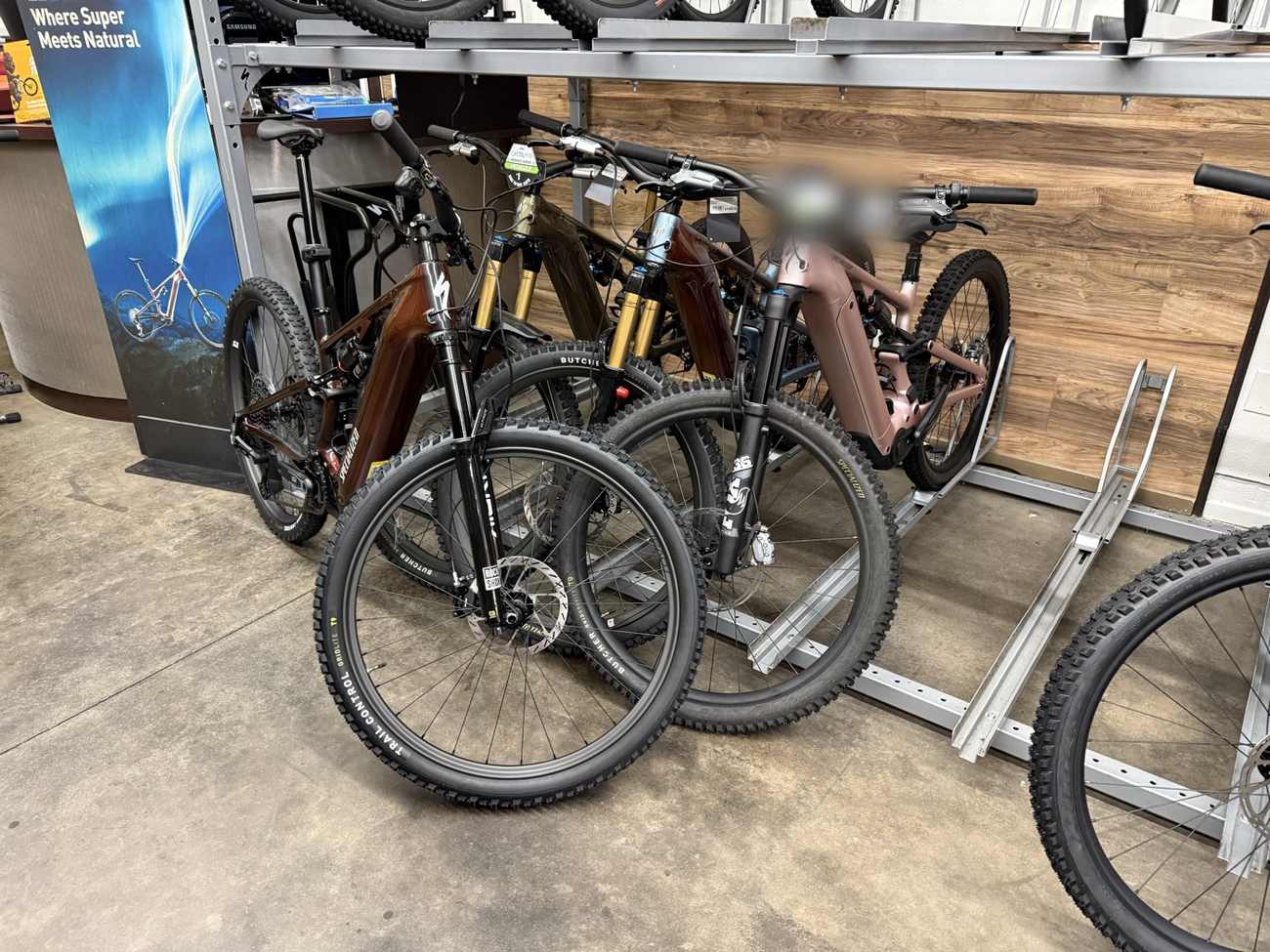
Roughly 85-110Nm of torque, 600-800Wh batteries, 48-55 lb. Think Specialized Turbo Levo 4, Trek Rail+, Orbea Wild, Santa Cruz Bullit, or Amflow's DJI-powered PX Carbon. This much assist erases the climb - 4,000-foot days turn casual, and descents you used to truck-shuttle become pedal-up laps. The cost is mass: the bike carries its weight into every direction change, tight switchback, and lift onto the tailgate. Modern geometry hides it at speed; nothing hides it in a parking lot.
Lightweight / SL: the normal bike with a tailwind
Roughly 50-60Nm, 320-430Wh, high 30s to mid 40s lb. Think Specialized Turbo Levo SL 2, Trek Fuel EXe (whose TQ motor is close to silent), Orbea Rise, or Santa Cruz Heckler SL. Half the assist of full-power - enough to take the sting out of climbing, not enough to delete it - in a package that corners, jumps, and manuals like the bike you already love. Most take a range-extender bottle when you want a bigger day.
My honest steer: if you're replacing shuttle runs, go full-power. If you love the feel of riding and just want more of it, go SL - that's the one I'd own.
The Class 1 rule (read this before you buy)
In the US, e-MTB trail access hangs on one definition. Class 1 means pedal-assist only, no throttle, with assist cutting out at 20 mph - and it's the only class most trail networks that allow e-bikes actually allow. Every bike on this page is built to it. Access still varies by land manager, though: some systems welcome Class 1, some don't, and the rules change trail by trail. Check Trailforks or the land manager before your first ride, and don't be the rider who gets a trail closed.
The best e-MTBs by budget
Ranked within each tier on spec-for-money and my editorial take on each brand - the same rule every guide here uses.
Best under $5,000
| Bike | Type | Travel (r/f) | Price | |
|---|---|---|---|---|
| Amflow PR Carbon ships direct | All-mountain | 150mm / 160mm | from $4,999 | View → |
| Aventon Current ships direct | Trail | 140mm / 150mm | from $3,999 | View → |
| Aventon Ramblas ADV hardtail ships direct | Trail | Hardtail · 130mm fork | from $2,899 | View → |
| Orbea Rise SL | Trail | 140mm / 150mm | from $4,799 | View → |
| Specialized Turbo Levo 4 | All-mountain | 150mm / 160mm | from $5,000 | View → |
| Cannondale Moterra Neo | All-mountain | 150mm / 160mm | from $4,499 | View → |
$5,000 to $8,000 - the heart of the market
| Bike | Type | Travel (r/f) | Price | |
|---|---|---|---|---|
| YT Decoy ships direct | Enduro | 160mm / 165mm | from $5,499 | View → |
| Specialized Turbo Levo 4 EVO | Enduro | 170mm / 180mm | from $6,700 | View → |
| Canyon Spectral:ON CF ships direct | All-mountain | 155mm / 160mm | from $5,299 | View → |
| Canyon Spectral:ONfly ships direct | All-mountain | 150mm / 150mm | from $5,999 | View → |
| Mondraker Neat | Trail | 140mm / 150mm | from $6,500 | View → |
| Mondraker Crafty | All-mountain | 150mm / 160mm | from $7,400 | View → |
$8,000 and up - flagship builds
| Bike | Type | Travel (r/f) | Price | |
|---|---|---|---|---|
| Ibis Oso TR | All-mountain | 150mm / 160mm | from $8,499 | View → |
| Ibis Oso HD | Enduro | 165mm / 180mm | from $8,999 | View → |
| Yeti 160E | Enduro | 160mm / 170mm | from $10,500 | View → |
| Crestline S 180 ships direct | Enduro | 182mm / 180mm | from $9,999 | View → |
| Crestline RS 181.2 ships direct | Park / DH | 181mm / 180mm | from $11,999 | View → |
| Pivot Shuttle SL | Trail | 132mm / 150mm | from $8,499 | View → |
Motor, no motor, or not sure?
The quiz asks you straight - pedal only, open to either, or definitely electric - then ranks the builds against how you actually ride, your terrain, and your budget. Find your bike →
What to expect at each price
- Under $5,000: A price band that barely existed two years ago. Hardtail e-MTBs and alloy full-suspension bikes with real mid-drive motors - heavier builds, simpler dampers, cable everything, but genuinely trail-worthy. Direct-to-consumer brands are rewriting this tier fast.
- $5,000-$8,000: The heart of the market. Current-generation motors, quality air suspension, SRAM GX or Shimano SLX/XT-class drivetrains, and a real choice between alloy and carbon.
- $8,000+: Flagship carbon, electronic shifting, top-tier dampers. Same diminishing returns as regular bikes - the motor in the $8,000 build is usually the exact same unit as in the $12,000 one.
Common questions
Are electric mountain bikes worth it?
If climbing volume is what limits your riding, yes. An e-MTB turns a two-lap evening into a five-lap evening, keeps you riding with faster friends, and keeps you on the bike through injuries and busy seasons. The honest costs: 10-20 extra pounds, more drivetrain wear from the extra power, and a battery that eventually needs replacing ($500-$1,000). If you already ride as much as you want to, a regular bike is still the simpler, cheaper answer.
How long does an e-MTB battery last?
Two different questions. Per charge: figure roughly 15-40 miles or 2,000-6,000 feet of climbing, depending on assist mode, battery size (roughly 320-800Wh), rider weight, and terrain. Lifespan: most batteries hold up for 500-1,000 full charge cycles - call it three to five years of regular riding - before capacity fades noticeably. Store it partly charged and out of extreme heat and it lasts longer.
What is a Class 1 e-bike?
Pedal-assist only, no throttle, and the motor stops helping at 20 mph. Class 1 is the category most US trail networks that allow e-bikes actually allow, and every serious e-MTB from a major brand is built to it. Class 2 (throttle) and Class 3 (28 mph) bikes are generally not welcome on singletrack - check the local land manager or Trailforks before you assume access.
Full-power or lightweight e-MTB?
Full-power (roughly 85-110Nm of torque, 600-800Wh batteries, 48-55 lb) if you want maximum laps, self-shuttled descents, or you are replacing truck shuttles. Lightweight, often called SL (50-60Nm, 320-430Wh, high 30s to mid 40s lb), if you want a bike that handles like a normal mountain bike with the climbs turned down a notch. My rule: riders who love descending choose full-power; riders who love riding choose SL.
Get your personal answer in 2 minutes
Guides give you the map. The quiz gives you the pin - your top 5 bikes, AI-matched to how you actually ride, with a plain-English reason for each.
Find your bike →The Quarterly Ride Report
Gear that survived the season
Four emails a year, straight from the trail: no-BS bike & gear reviews from real rides, price-drop alerts on bikes actually worth buying, and first word on new releases worth caring about. No spam, ever - unsubscribe anytime.
Specs and prices are a snapshot compiled from brand-published information - always confirm current details on the brand’s site. Some links earn us a commission at no cost to you; it never affects our picks. No brand pays to be featured.